
The Big Picture
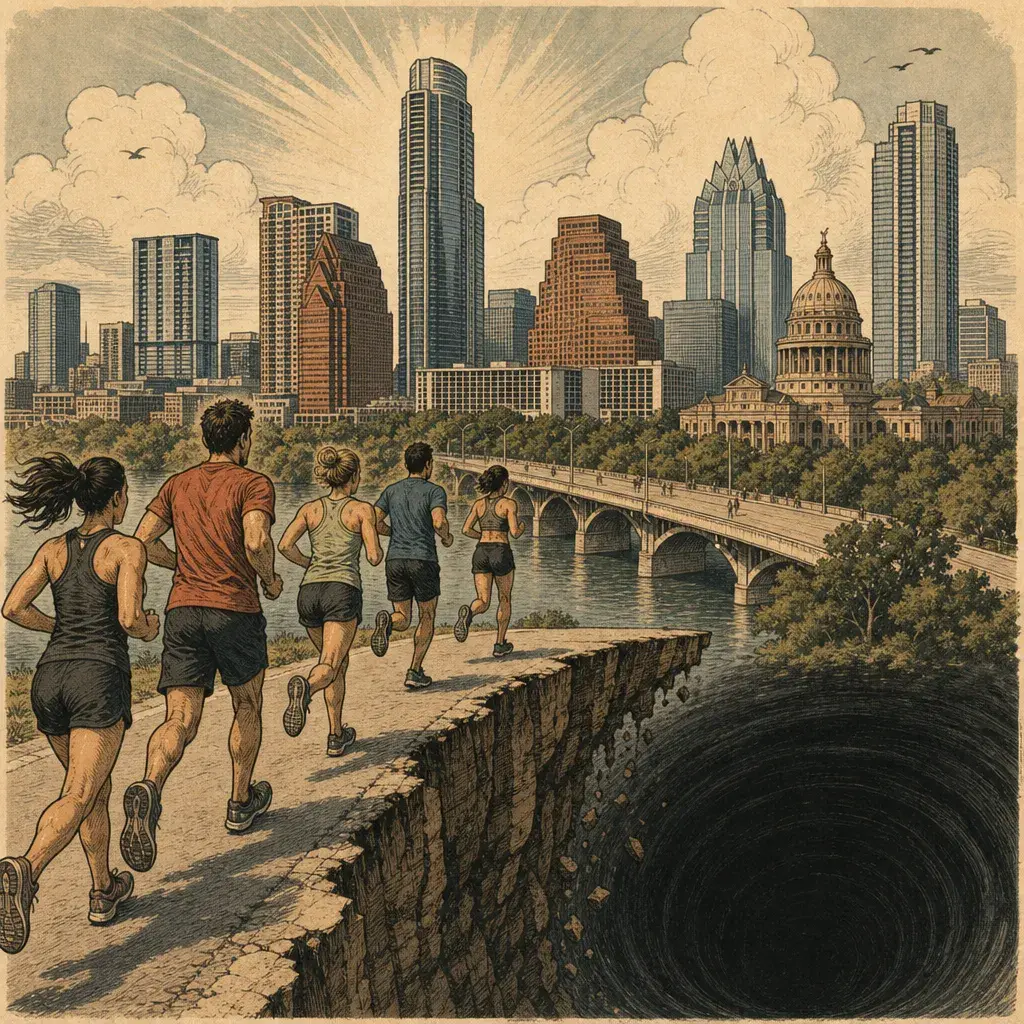
There is a comforting fantasy that if you outrun your problems fast enough, they will eventually tire out and stop following you. Austin mostly outran the rest of Texas in this year's health sprint: the city was named the second fittest in Texas and 28th among the 100 most populated US cities in the 2026 American Fitness Index. That sounds like a medal until you remember the trophy case is split into two shelves — one labeled personal health where Austin does pretty well, and one labeled community and environment that looks like it missed a rent payment.
By the Numbers
No. 28 Austin's national rank among the 100 most populated cities, per the 2026 American Fitness Index. No. 2 Austin's rank within Texas — only one Lone Star city scored higher. No. 21 Austin's placement last year, meaning the city slipped seven spots nationally in 2026. No. 19 Austin's rank in the personal health category, where individual behaviors and outcomes look relatively strong. No. 55 Austin's rank in the community and environment category, described plainly as nearly average and a glaring counterpoint to the personal health numbers.What Changed
Last year Austin sat at No. 21 nationally; this year it fell to No. 28. That's not a collapse, but it's a nudge in the wrong direction. The split between personal health and community metrics suggests the typical Austin paradox: residents are relatively active, well-educated, and engaged in healthier behaviors, but the city's built environment and public health infrastructure aren't keeping pace. Translation: people are doing the work individually, while the civic systems that would amplify that goodwill — parks maintenance, safe walkable streets, equitable access to recreation — are underperforming.
Why It Matters
Because high personal fitness is a fragile victory if the sidewalks crumble, heat waves intensify, and policy investment goes to glossy development instead of long-term resilience. An individual's healthy choices don't scale into public health unless the city invests in community-level supports. Tonight, that gap matters for everything from emergency preparedness to how much pressure falls on clinics and small businesses when the next environmental stressor hits.
Between the Lines
This ranking is less a celebration and more a diagnostic: Austinites have strong health behaviors, but the city's systems are almost average, which in a growing metro can translate into widening inequities. The optics of being 'fit' mask structural weaknesses — think boutique spin studios overshadowing lack of affordable recreation spaces in some neighborhoods.