
The Big Picture
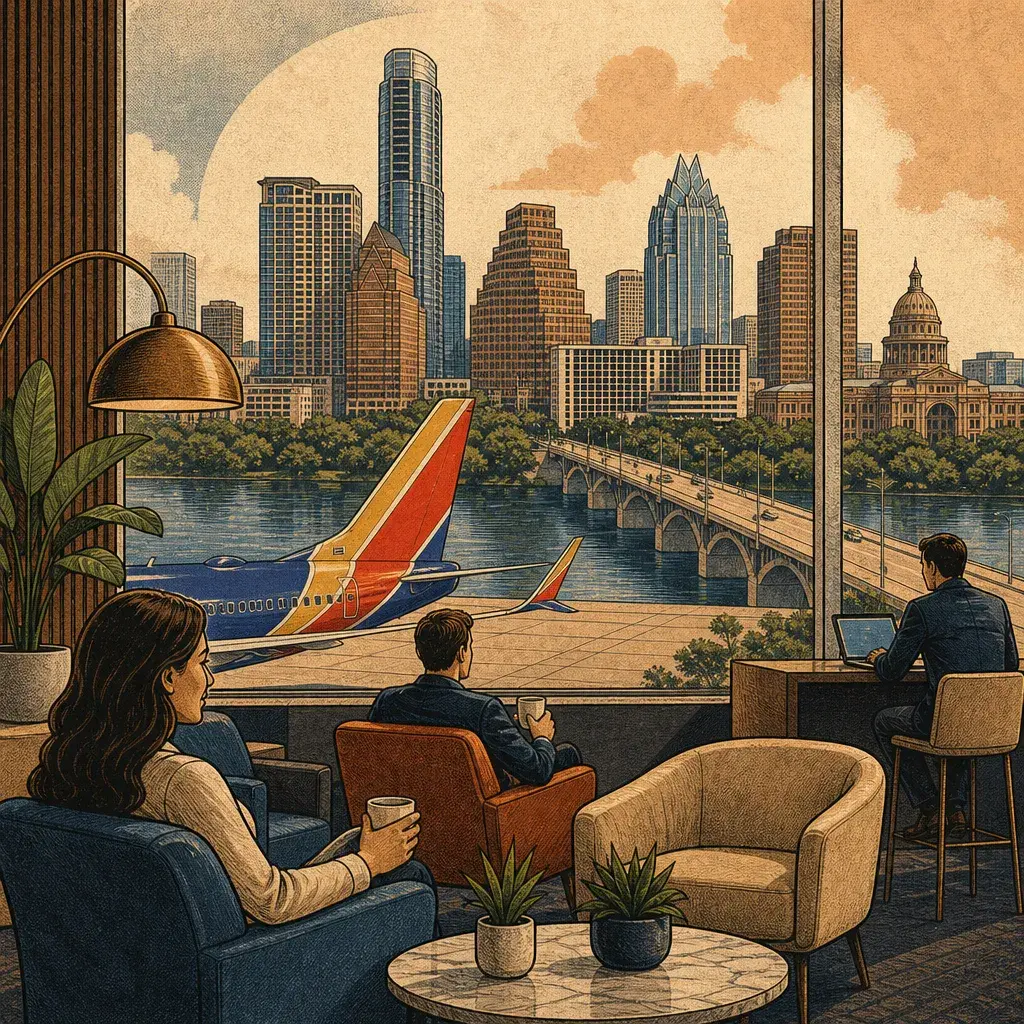
Air travel has always been a negotiation between urgency and small comforts, like a lukewarm coffee found in a plastic cup. Now Southwest Airlines is changing that math: Austin-Bergstrom International Airport is one of four airports selected for Southwest's first-ever airport lounge network. It’s the company’s formal step into the premium airport experience it historically avoided, and it lands in Austin because the city is both profitable and impatient.
By the Numbers
4 airports Number of locations chosen for Southwest’s inaugural lounge rollout. 0 Count of Southwest-branded airport lounges in operation prior to this announcement—this is the airline’s first attempt. Tens of thousands Rough scale of daily passengers through major U.S. airports who are the potential market for paid lounge access (a conservative framing; exact figures vary by airport). 1 Austin-Bergstrom: one of the four airports, and the local theater for this test case.What Changed
Southwest historically sold itself on no-frills value: open seating, straightforward fares, a loyalty program that didn’t require constant strategizing. Adding lounges shifts the brand architecture toward segmentation—pay for comfort, or don’t. For travelers, that means Southwest is copying an airline playbook that turned gate areas into socio-economic waiting rooms. For airports like AUS, it means new revenue streams and a different customer experience at the concourse level.
Why It Matters
Because this is how convenience gets rationed. Lounges are small islands of calm that require a fee or elite status to enter, and their spread changes what flying feels like. If you care about travel staying affordable and messy, this is the moment it becomes smooth and stratified instead. For Austin specifically, a Southwest lounge could make the airport feel more like a city that’s earned its comfort—and less like the pragmatic transit hub it needs to remain for most travelers.
Between the Lines
Expect loyalty tweaks, tiered pricing, and partnerships with credit cards or corporate travel programs. The real experiment is behavioral: will loyal low-cost flyers pay for the niceties they once shrugged off, or will lounges mostly capture business travelers and people who treat a lounge membership like a status prop?
What's Next
Southwest will likely reveal locations, membership pricing, and opening windows in phased announcements. Local stakeholders—airport officials, concession operators, frequent travelers—will be watching for how the space is allocated and who benefits.