
The Big Picture
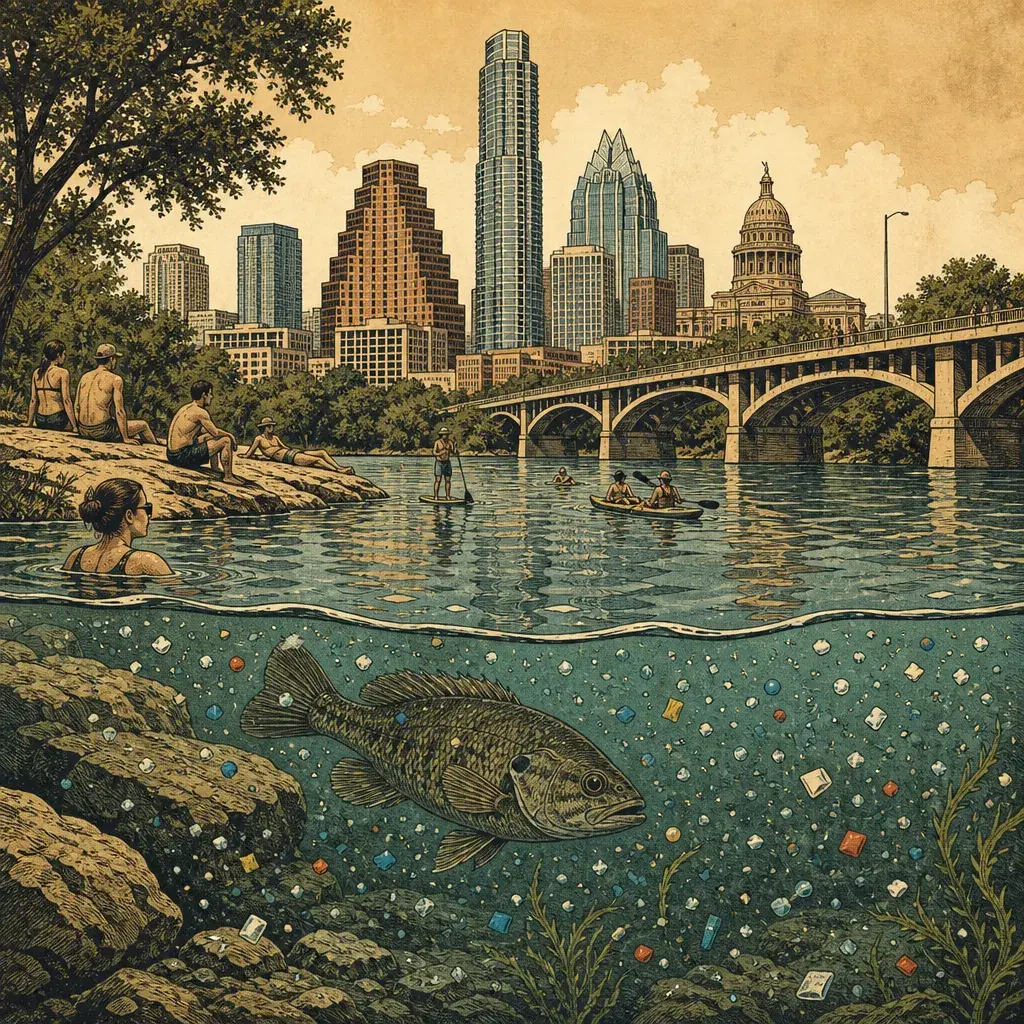
We like to imagine our beloved springs and lakes as escape hatches from civilization’s grind. The Environment Texas Research & Policy Center’s first statewide report on plastic pollution insists that escape hatch now has microplastic glitter in it. Researchers analyzed water samples from 77 sites across Texas — from the Red River down to the Rio Grande — and found microplastics in 76 of them, including Austin staples Barton Springs, Blue Hole, and Lady Bird Lake. This isn’t a quirky local anomaly; it’s a statewide breadcrumb trail of tiny plastic particles where we swim, fish, paddle and try to forget about work for an hour.
By the Numbers
77 sites Number of sampling locations analyzed across Texas, coast to border. 76 of 77 Sites where microplastics were detected, per the Environment Texas Research & Policy Center report. Barton Springs / Blue Hole / Lady Bird Lake Iconic Central Texas sites specifically named in the statewide findings. First statewide report This is ETRPC’s inaugural comprehensive look at plastic pollution in Texas waterways.What Changed
It’s not that microplastics suddenly invented themselves last week; the change is in scale and attention. This is the first time a single organization has mapped plastic pollution across the whole state, so the narrative shifts from “maybe it’s local” to “this is widespread.” Sampling breadth and method standardization make the results harder to dismiss. And in a state where water and outdoor recreation are central to identity and tourism, documenting microplastics at high-profile urban and natural sites forces a policy conversation that previously lived under the radar.
Why It Matters
Because these places matter: Barton Springs is not just water, it’s a cultural landmark; Lady Bird Lake is the city’s backyard. Microplastics are tiny but pervasive, and their presence complicates assumptions about purity, safety and stewardship. We don’t yet have definitive, universal rules for what detected microplastics mean for human health during occasional swims, but we do know they can be ingested by wildlife and travel through food webs. For residents and visitors tonight, the question is practical and moral — do we tolerate convenience that shows up in our waterways, or do we demand policy and infrastructure that make those waterways less of a landfill?
What's Next
Expect calls for more monitoring, clearer municipal and state tracking, and pressure on single-use plastics policy. Local groups and park managers may pursue additional testing or public education campaigns. The data don’t prescribe immediate catastrophe, but they do move the conversation from anecdote to evidence — which, in policy terms, is where things either start to change or stall.