
The Big Picture
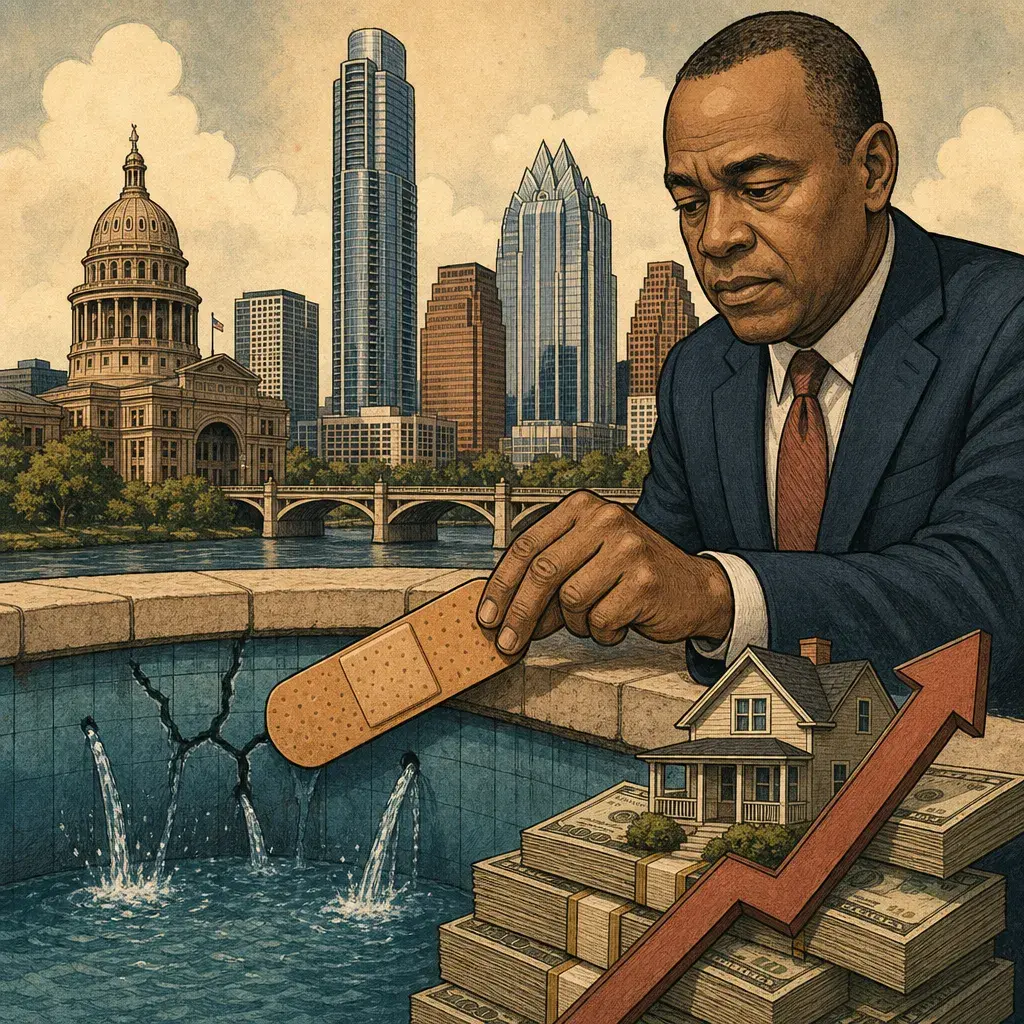
Austin City Manager T.C. Broadnax has proposed a $6.6 billion budget aimed at keeping the lights on, the pipes working and the population serviced as the city grows. The proposal closes a roughly $26 million gap by using a 3.5% property tax increase — the legal maximum under current caps — while prioritizing public utilities and planning for continued population growth. It’s a balancing act between immediate revenue needs and long-term infrastructure strain, delivered with the resigned calm of someone tossing sandbags at a rising tide.
By the Numbers
$6.6 billion Proposed total city budget for the fiscal year. $26 million The shortfall the proposal is designed to cover. 3.5 percent Proposed increase in the property tax rate (at the legal limit). Priority — Public utilities Water, power and sewage get funding emphasis to match growth pressure. Priority — Population growth Planning and services scaled to a city that keeps expanding faster than solutions arrive.What Changed
The arithmetic of growth is not subtle: more residents mean more demand on water, roads, and emergency services. Revenue projections and inflation squeezed the city’s prior assumptions, producing the $26 million gap. City leadership chose the legal property tax ceiling rather than deeper cuts or more aggressive fee increases, signaling a preference to shore up utilities and growth planning now rather than postpone hard choices. That’s a policy shift toward maintaining service levels even if it nudges the tax bill upward.
Why It Matters
Property taxes are everyone’s direct link to municipal trade-offs: you feel them in your mailbox and in the potholes you drive over. A 3.5% bump at the legal limit sets a precedent — it tells residents the city will prioritize infrastructure continuity over short-term tax relief. If you live in Austin, tonight’s numbers will shape your services and bills next year. If you’re watching from the periphery, it’s a lesson in how growth forces choices on governments and taxpayers alike.
Between the Lines
This budget is less a victory lap than triage. Prioritizing utilities and growth planning buys breathing room, but it does not solve underlying affordability or long-term funding volatility. Expect debate at council about trade-offs between capital projects and operating reserves.
What’s Next
The proposal moves to City Council deliberations and public hearings. Council could adjust the rate, reallocate priorities, or ask for more time to find alternative savings. The clock now belongs to civic process and public reaction.