
The Big Picture
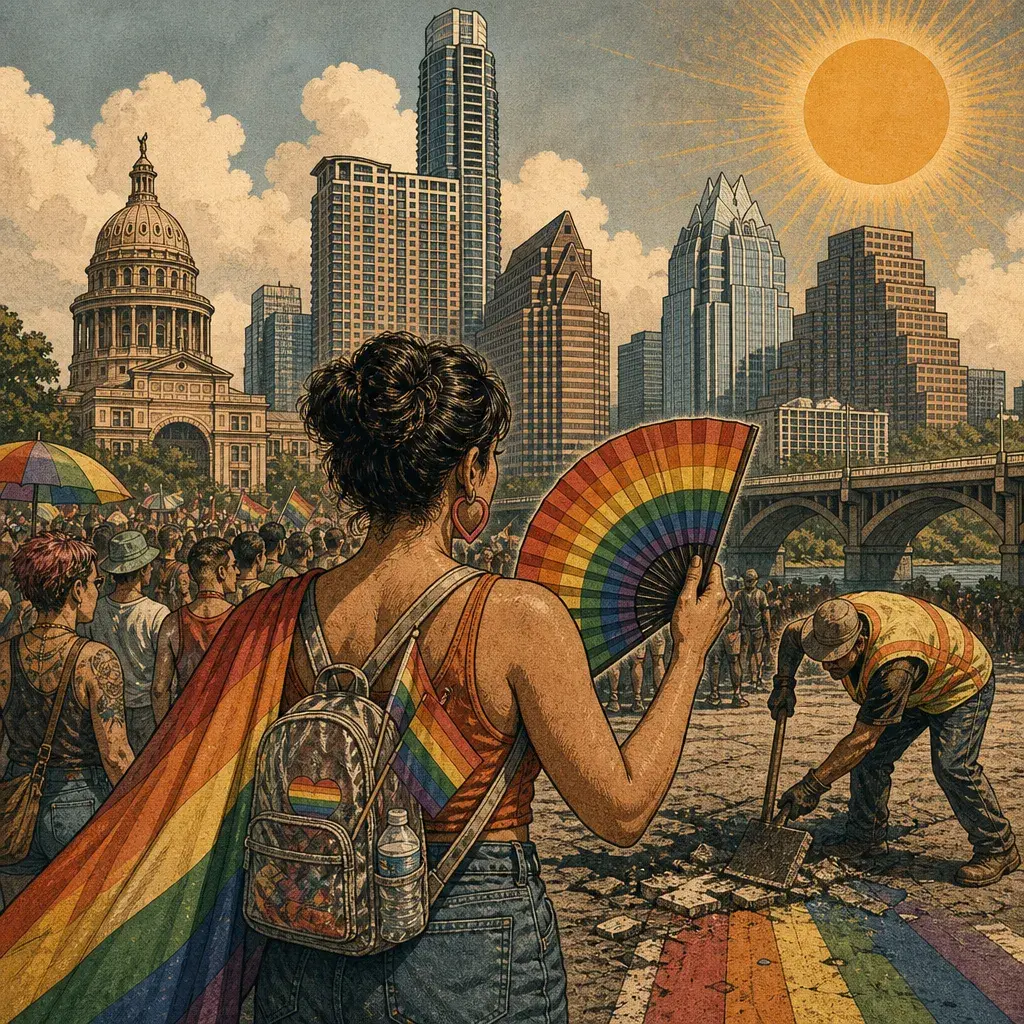
The city-centre pulse of Austin Pride beat on Saturday as thousands gathered downtown to celebrate LGBTQ+ community and culture even as rising event costs, oppressive summer heat and the recent removal of a rainbow crosswalk altered the scene. What looked like an act of collective refusal — people showing up despite logistical and atmospheric friction — is also a snapshot of how public celebration is being negotiated between organizers, municipal actors and market forces.
By the Numbers
Thousands Estimated people who attended downtown Pride events Saturday, turning the streets into a crowded, sweaty affirmation of community. High 90s–100s °F Afternoon temperatures and heat-index conditions that made shade and water the most valuable currency on site. 1 Rainbow crosswalk removed from a downtown route ahead of the event, a visible change in the parade’s urban choreography.What Changed
Three things shifted the texture of this year’s Pride: rising operational and participation costs that push more programming behind paywalls; seasonal heat that turns public space into a physiological challenge; and a small, symbolic municipal decision — the removal of a rainbow crosswalk downtown — that rewrote part of the route and the visual script of the celebration. Together those forces shape who can comfortably participate, where attention lands, and how organizers allocate limited resources (security, water, shade, stages).
Why It Matters
Because Pride is both protest and party, and when the party starts costing more and the city’s gestures of inclusion disappear one crosswalk at a time, the political meaning changes. If access requires a ticket, or if the heat forces people to opt out, celebration becomes a narrower thing. That matters tonight because public rituals are how communities stake a claim to civic space — and those claims are becoming contested by economics, climate, and small administrative choices.
Between the Lines
Removing a visible symbol like a crosswalk isn’t just maintenance; it’s a statement about who the streets are for. The crowd’s turnout suggests resilience, but resilience is not a sustainable strategy for preservation of public culture — it’s a stopgap. Organizers will be balancing fundraising, permitting and public safety in increasingly hostile conditions: hotter summers and pricier events.