
The Big Picture
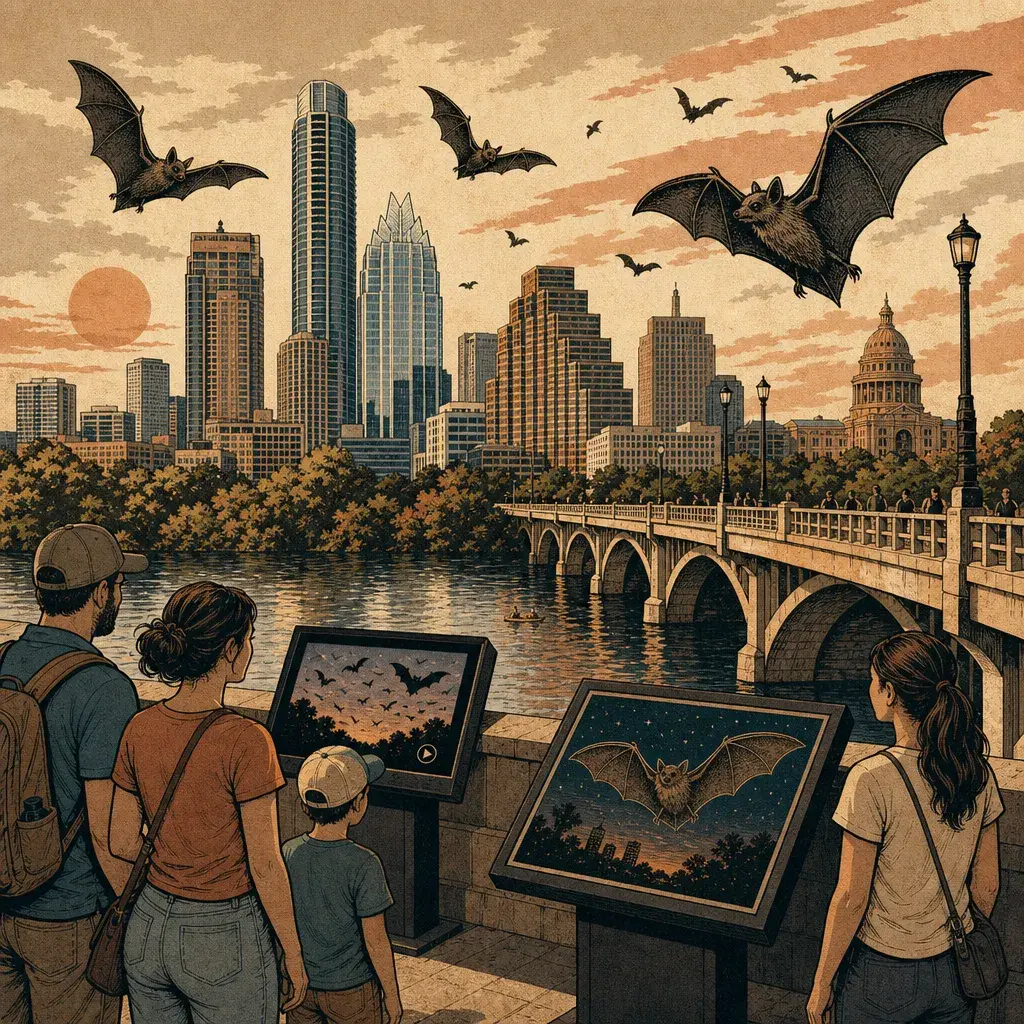
Late-night scrolling reveals two eternal truths: people crave spectacle, and Austin refuses to let a spectacle go undocumented. Bat City is a new educational installation set to debut Aug. 26 on the south side of the Ann W. Richards Congress Avenue Bridge, designed to give context to the nightly migrations of Austin's Mexican free-tailed bat colony. The project — interpretive signs, bilingual videos, and other on-site materials — was conceived by Austin wildlife filmmaker Skip Hobbie to meet the crowds halfway: you watch the bats; the city answers the questions you were too busy gawking to ask.
By the Numbers
Aug. 26 Official debut date for the full Bat City installation, including signs and bilingual video content. Every night Thousands of viewers gather at the south side of the Ann W. Richards Congress Avenue Bridge to watch the bat emergence. 1 bridge The south side of the Congress Avenue Bridge is the focal point for the viewing area and the new interpretive elements. 1 filmmaker Skip Hobbie, an Austin wildlife filmmaker, is credited as the project's originator and primary creative force.What Changed
Before Bat City, the nightly bat show was mostly self-directed: people line the bridge, someone posts a shaky video, and urban folklore fills the gaps. The shift here is institutional: design-forward interpretive materials and bilingual videos transform a pass-through curiosity into an educational, place-based experience. This is not just signage — it's an attempt to shape the narrative about Austin's bats for the crowd that treats the bridge like a cheap IMAX. The project formalizes what was previously informal: education stuffed into the margins of tourism and nightlife.
Why It Matters
Because the thing about spectacle is that it changes behavior. When thousands show up every evening for a natural phenomenon, misinformation, disturbance, and safety issues follow. Bat City aims to translate wonder into stewardship — or at least into fewer flash photos and less yelling during the emergence. It also signals a wider civic move: acknowledging that public wildlife viewing is part of Austin's identity and that identity benefits from interpretation, language access, and intentional design.
Between the Lines
This feels like an admission: we can’t stop people from forming Instagram camps on the bridge, but we can give them better captions. Making the materials bilingual widens the audience beyond the tourist set and recognizes that environmental education is most useful when it’s accessible.