
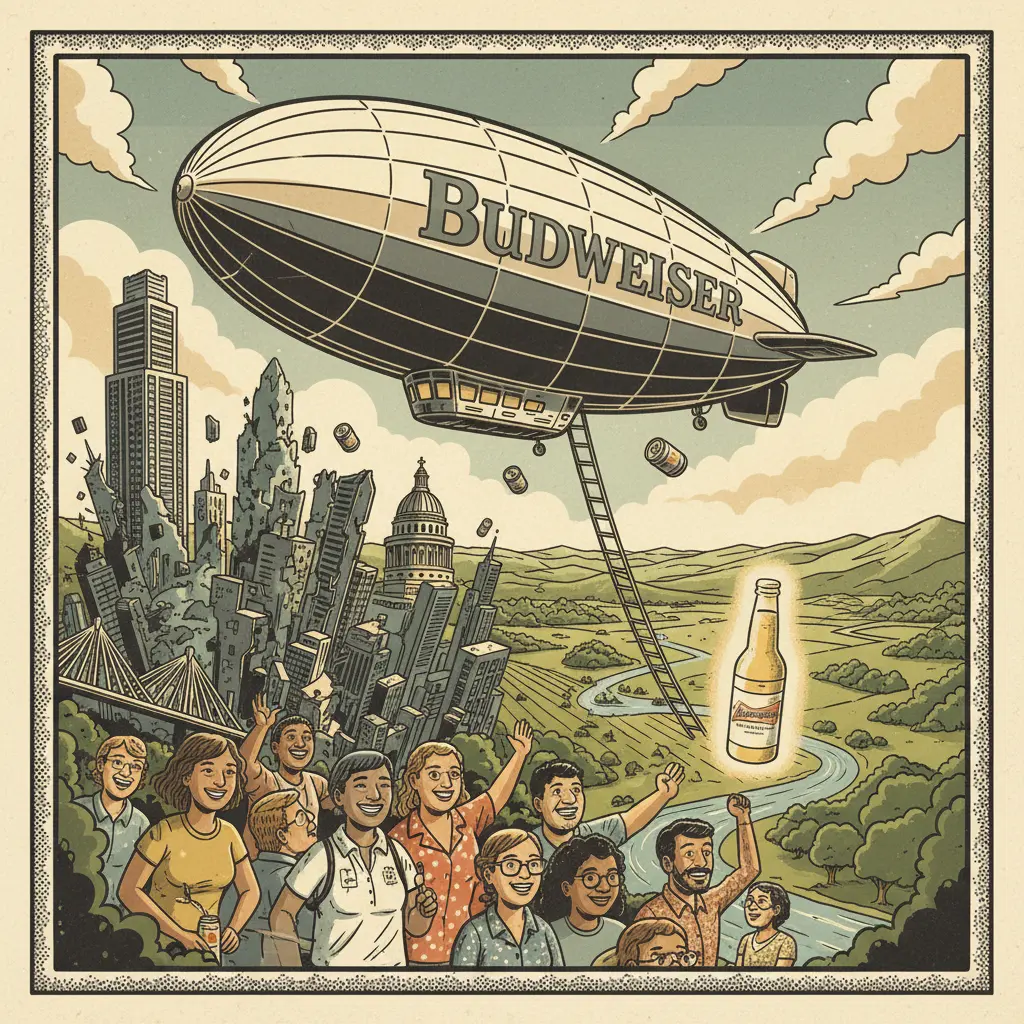
In a world spiraling towards oblivion, where every notification is a fresh hellscape of doomscrolling, Anheuser-Busch offers a brief respite: a Super Bowl commercial starring a Clydesdale and a bald eagle. It's pure, unadulterated, equine-avian friendship, untainted by the crushing weight of global affairs. For 60 seconds, we can pretend that the biggest problem we face is a baby horse getting lost in the woods.
The Big Picture
The commercial depicts a Clydesdale foal wandering from its stable and encountering an injured bald eagle. It's a classic tale of unlikely friendship, set against a backdrop of amber waves of grain, presumably grown without the use of soul-crushing corporate farming practices. Budweiser is banking on nostalgia and heart-tugging animal bonds to sell beer, a strategy as old as advertising itself.
By the Numbers
What Changed
The shift is towards emotional marketing. In an age of constant anxiety, brands are ditching irony and leaning into sentimentality. Budweiser is betting that viewers are tired of cynicism and crave a return to simpler times, when the biggest controversy was whether the frogs should say "Bud" or "Bud-weis-er." The forces at play are consumer fatigue, the algorithm's insatiable hunger for engagement, and the ever-present fear of the abyss.
Why It Matters
Because we're all looking for an escape, even if it's just for a minute. The Super Bowl is a cultural spectacle designed to distract us from the fact that the world is on fire. Budweiser's commercial is a tiny, flickering candle in the darkness, reminding us that even in the face of existential dread, a horse can still befriend an eagle. It's a fleeting moment of manufactured joy, but sometimes, that's all we have.