
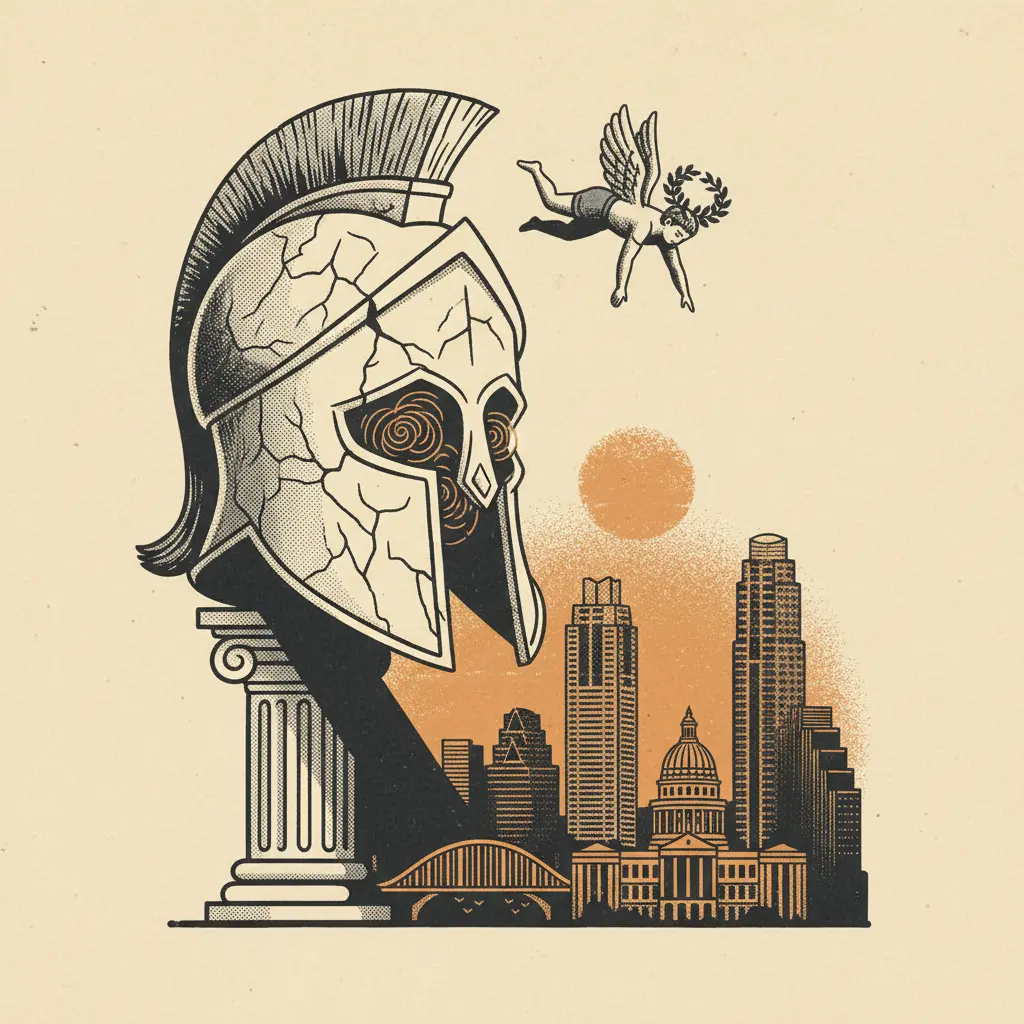
In a world saturated with hollow gestures, the line between genuine protest and empty symbolism blurs into a grayish sludge. And in that sludge, we find the story of Vladyslav Heraskevych, the Ukrainian skeleton racer whose helmet became a flashpoint at the Winter Games. A flashpoint that led to his disqualification and a whole lot of existential questions.
The Big Picture
Vladyslav Heraskevych, already a veteran Olympian, planned to use his helmet to display a message of support for Ukraine amidst rising tensions with Russia. The International Olympic Committee (IOC), ever vigilant against anything that might remotely resemble a political statement, intervened, deeming the helmet a violation of their oh-so-sacred Rule 50. The result? Heraskevych was barred from competing in the Games. This isn't just about sports; it's about the increasingly absurd dance between individual expression and institutional control.
By the Numbers
What Changed
The shift here is the increasingly fraught intersection of sports and politics. Once upon a time, we could pretend that athletes existed in a vacuum, untouched by the messy realities of geopolitics. Now, with social media amplifying every gesture and every grievance, the IOC is desperately trying to maintain a facade of neutrality, often at the expense of individual expression. It's a losing battle, frankly, because everything is political now.
Why It Matters
Because it's a microcosm of the larger struggle: the individual versus the institution, the authentic versus the manufactured, the fleeting moment of genuine expression versus the crushing weight of bureaucratic indifference. It's a reminder that even in the realm of sports, there's no escape from the pervasive feeling that everything is rigged, and that the only winning move is not to play. But then again, what else are you going to do tonight? Stare into the abyss? Exactly.