
The Big Picture
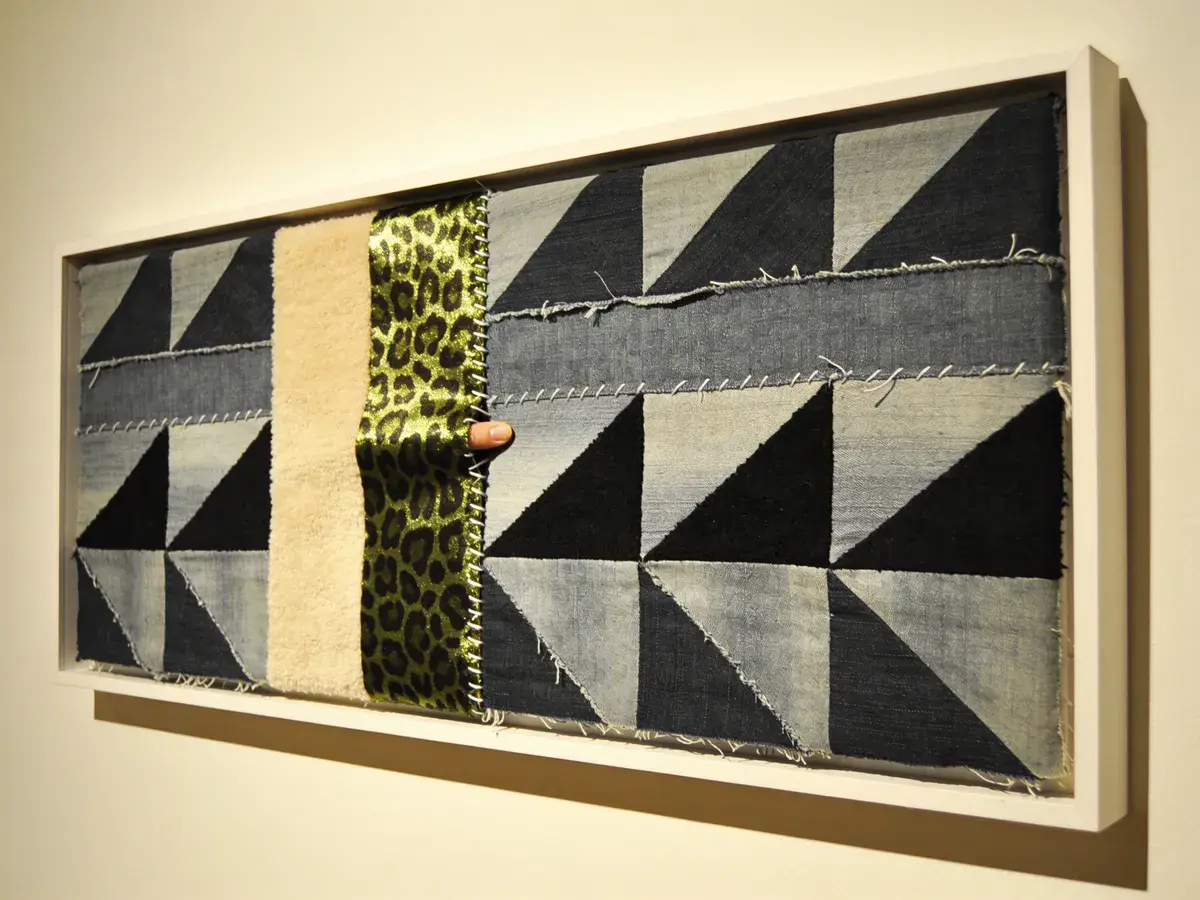
Look: Regina Durante Jestrow’s “Strips, Stripes, Pieces, Parts” at Ivester Contemporary stages thrifted shirts, capris and scraps as paintings that refuse the lie of polish. From across the room, these works read like tidy geometric abstractions—stripes, grids, repeating triangles—but they insist you approach. Up close the illusion loosens: visible seams, exposed edges, changes in texture and fragments of identifiable garments interrupt the geometry. The materials—hand-dyed cotton, felt, lamé and found cloth—arrive already charged with prior use; Jestrow’s stitching keeps those biographies in play rather than erasing them into a smooth finish.
What Changed
Jestrow shifts where value and finish live in an artwork. A piece such as Painting 14 (Log Cabin) will initially enter the conversation of modernist repetition and color rhythm, and then the eye collides with a stitch. Pieced Landscape 69 (Green Leopard Capris) doesn’t hide its source; it names the garment remnant and makes that prior life legible in the work’s title. Pieced Landscape 68 (Last of the Gold Roses) similarly retains damask and lace so their earlier contexts are not simply flattened out. The result is deliberate: surface becomes record. Sewing, cutting and saving—the slow, bodily labor often coded as domestic—are not cosmetic steps to be hidden but the visible grammar of the compositions. Where many artworks tidy away their making, these pieces keep process on display and, in doing so, unsettle the usual hierarchy that prizes the new and seamless over reused material and handwork.
What's Next
The exhibition remains on view at Ivester Contemporary through October 17, so there’s a narrow window to move between Jestrow’s two modes—stepping back to read the geometric patterning and stepping forward to trace stitches and salvaged fragments. The Chronicle’s reading frames this practice as a feminist revaluation of materials and traditionally feminized labor—sewing, saving, stitching—assigning fresh worth without pretending those earlier lives disappeared. Go see the work before the thrift-store ghosts get rehung and rehoused somewhere less honest than these surfaces.